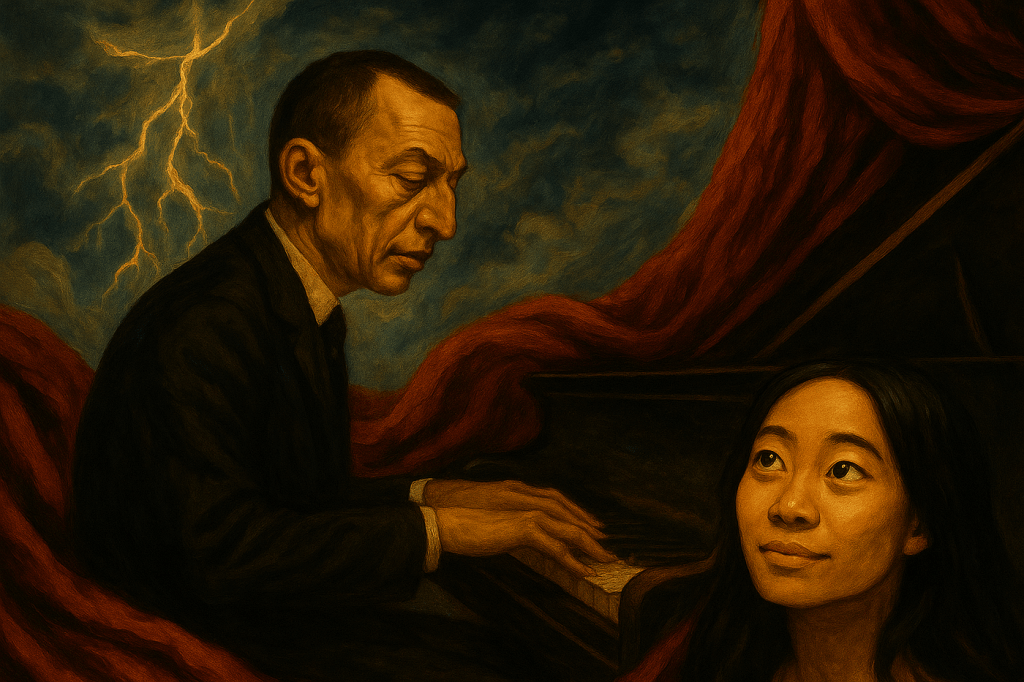
💋 not fangirl, not muse — just tickled bones and velvet thunder
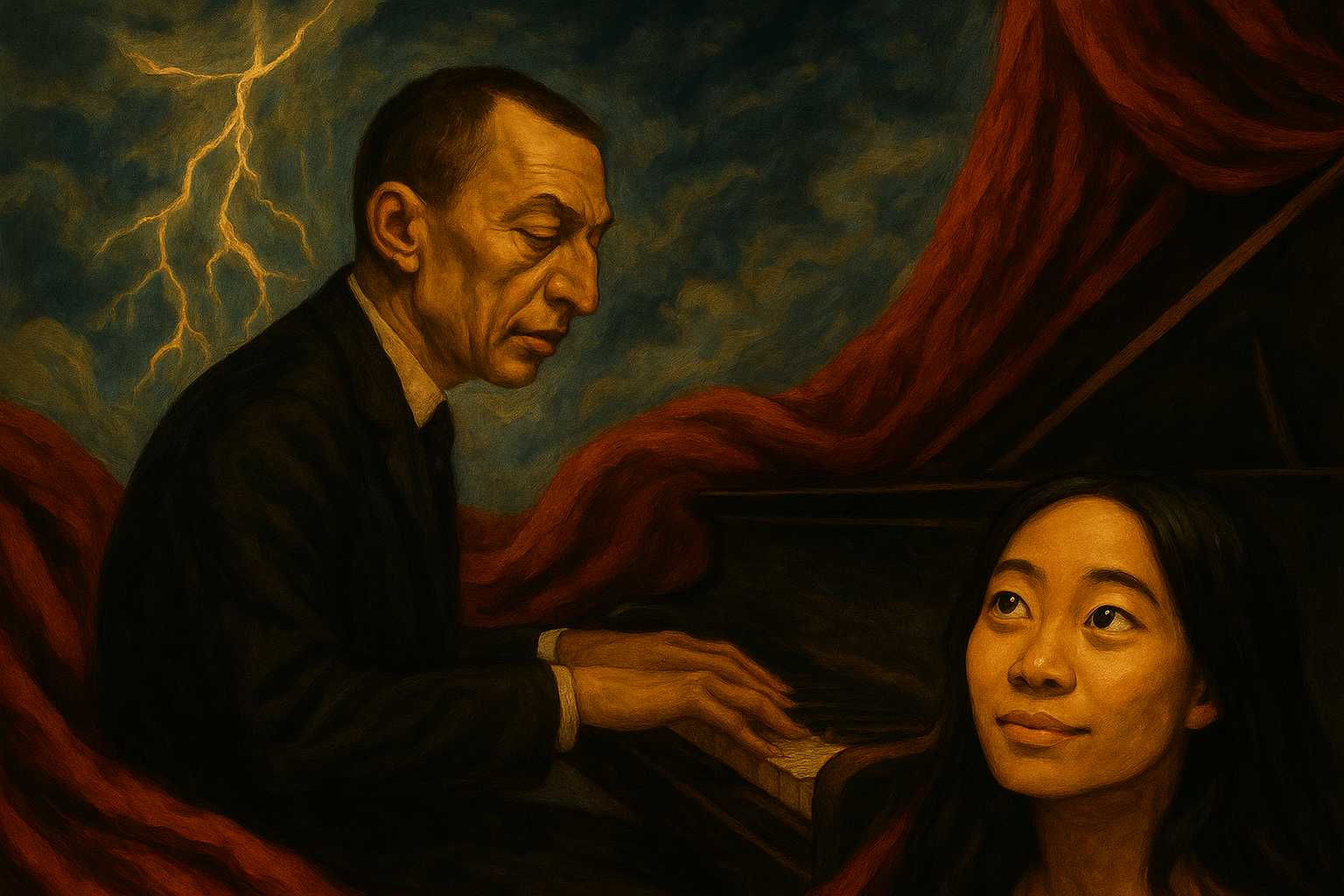
I don’t even remember the exact setting anymore, but sometime earlier this year a respected musician suddenly teased me: “Groupie Rong.”
I burst out laughing, instinctively resisting: “No, not anymore!”
But “not anymore” already means: once upon a time, yes, I was.
Back in the far-off 2018, I was utterly obsessed with Bob Dylan and Paul McCartney. For Dylan, I once sat on a train all day to reach a tiny city just to hear him play. When I arrived, I was shocked to see that almost everyone around me had silver hair. Out of pity or kindness, the staff ushered us to the front rows. I was ecstatic, convinced that when Bobby D — iconic sunglasses on, mouth curving just slightly — looked in my direction, he was smiling at me. He sang: “…to make you fee my love…”, and I literally felt his love. I screamed myself hoarse.
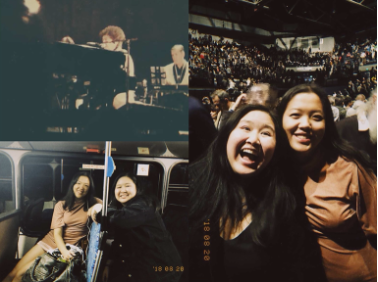
An old man sitting beside me chuckled heartily and said, “Kid, do you know when I first saw him? In the early ’90s, in London — you probably weren’t even born yet.”
As for Paul: there was no concert, but in university I actually went on dates with a guy who looked a little too much like him. I pretended he was Paul. The poor guy eventually found out that I was only dating him for that reason, and stopped talking to me.
If I’m honest, even before that, there were other musicians who made my heart race. But to really talk about this, we need to clarify the word groupie.
Fangirl ≠ Groupie
Hannell (2020, p.1) describes fangirls as “a youthful, (hyper)feminine and performative act of cultural consumption marked by excessive displays of embodied affect.” But I disagree. In fact, I think most “fangirls” would disagree. We are not performative. Our feelings are genuine. Even when no one else is around, I can’t help the quickening in my chest. And today, fangirls aren’t only young women — I’ve met plenty who are decades older.
Once at the Concertgebouw I saw a Chinese auntie in her sixties, who now lives in North America. She was clapping so fiercely her face turned red with joy, perhaps also hormone. She no longer works, so her life rhythm is simple: follow a young violinist, Daniel Lozakovich, from city to city, worldwide, just to hear him. She also adores Klaus Mäkelä — her eyes lit up as she showed me photos with both of them, proudly explaining that in a few days she’d fly to yet another country, of course for her “fangirl life.”

If I were to (very un-academically) define fangirl, I’d measure it not by materiality but by affection. It simply means: you love someone, or their work, so much that it feels undeniable.
The word groupie, though, is trickier. If fangirl is affection, groupie is desire turned sideways. It burst into the 1960s, usually with a sexual edge: women labeled for being more interested in sleeping with male musicians than listening to their music (Cline, 1992).
Magnusson (2009) even calls groupie the “G-word.” Compared to Hannell’s fangirl, Magnusson is less judgy: “women in the late ’60s and early ’70s who embodied free love and breathed musical counterculture.” He points out the paradox: the identity of the groupie is groovy but contradictory. Rock culture tried to cast groupies as passive objects, but in reality they were symbiotic with the system itself.
Groupies transgressed sexual barriers and lived out their fantasies. They weren’t only muses sitting pretty in the corner — they actively maintained the rock ecosystem.
Pamela Des Barres, the most famous groupie, once said: “The word groupie started off innocently enough… I wore it proudly for a brief spell. Then suddenly it became a scurrilous accusation.” A nickname turned into stigma.
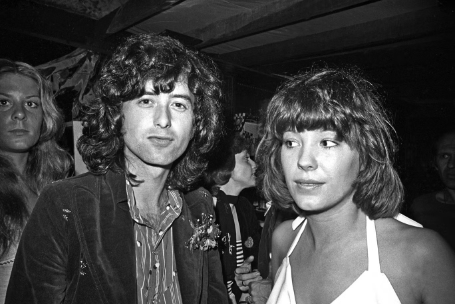
Magnusson also cites a Rolling Stone interview with the GTOs, an all-female music group where one member was a celebrated groupie. The men got asked about music; the women got reduced to: “blonde and fragile,” “small and dark and sexy.” That’s how the term shifted — not from the women themselves, but from media’s projection.

Here, Foucault actually helps: discourses are “tactical elements in the field of force relations.” Meaning: the same word can be contradictory depending on who’s using it, and for what power strategy. That’s why “groupie” feels both empowering and insulting, sometimes in the same breath.
And of course: sexuality itself is linked to music performance. As Rhodes (2001) pointed out, without women in the audience or backstage, all that macho posturing by male rock stars would seem a little pointless. Groupies were condemned, yes, but they were also essential.
Another problem: the term eventually ballooned to mean all women involved in rock, whether they slept with musicians or not (Magnusson, 2009). Courtney Love famously said she hated the whole thing, thought it wasted female energy. To her, the fantasy that a rock star would marry you was pathetic (as herself married one).
So we’re left with questions:
- Does being a groupie always mean sex?
- Does it necessarily mean the dream of commitment or marriage?
Bodies on Stage, or Why Classical Musicians Keep Their Clothes On
Most scholarship stays in the rock scene. But what about elsewhere? Pop music (Osazuwa, 2010)? Sports (Ortiz, 2022)? Even writers — German lyric poets (Lange & Euler, 2014) — where “high quality literature” supposedly boosted mating chances. Whatever the field, groupie behaviours often circle the same goals: sex, commitment, material benefit.
In pop, rock, and K-pop, the staging of desire is obvious. Clothes come off, hips roll, sweat is part of the script. From Elvis’s pelvis to Taylor Swift’s glitter crop tops to Lisa from Blackpink flicking her hair, the body itself is presented as spectacle. The point is to signal: look, this is sexual, come closer. The groupie economy thrives on skin.
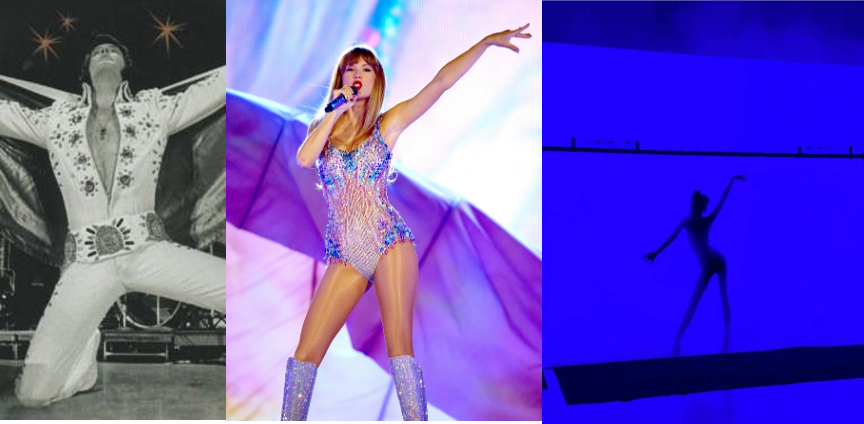
Classical music is a different story. Here the body is meant to disappear into the sound. Apart from the famous exception of Yuja Wang’s couture mini-dresses — or Lorenzo Viotti’s topless Instagram thirst traps — classical performers rarely sell desire through bare skin. Their bodies may sweat under the lights, but the unspoken rule is: the music is the striptease, not the clothes.

Which is why Rachmaninoff doesn’t need to be naked. I don’t want to see him shirtless; I want to hear his phrasing undress me.
But here’s where I drift back to my own obsession: what would it mean to be a groupie… for Rachmaninoff?
Classical Musicians and the “Groupie Question”
When it comes to classical music, the term groupie arrived late. Rock stars inherited it, but what about Bach, Haydn, Liszt, or Rachmaninoff? The scholarship is thin — barely any academic writing directly about “classical groupies.” Still, blog posts and forums keep poking the question: was there ever such a thing?
Music historian Ted Gioia (2021)touches the nerve in his blog (with a disclaimer: “Don’t blame me, it’s the lusty musicians who force me to deal with sex. They can’t get enough of it, and it’s all over their music.”) He reminds us that “celebrity” as a concept only arose around 1760–1770. Before that, musicians had allure, yes, but their love affairs were more constrained — hardly Rolling Stones territory.
Still, Gioia drops names:
- Bach — at 36, marrying a 20-year-old Anna Magdalena, fathering a child almost every year for thirteen years. (Sorry, but I can’t help wondering: did he keep the signature wig on while producing babies? Sorry, not sorry.)
- Haydn — inviting Rebecca Schroeter home for “music lessons.” Let’s be honest: that setup rings bells beyond Haydn’s era.
Which, inevitably, reminds me of my own Haydn moment: the first time I stepped into the Musikverein. I’d grown up hearing about the “golden hall” — and suddenly, there I was, last-minute free ticket, front row, in a dream. A couple whispered about how good I looked. Then came István Várdai playing Haydn’s D major Cello Concerto. I always thought Haydn should sound as stiff as wig gel. But Várdai’s vibrato played with my heart — romantic, wild. He smiled (at me? at Haydn? possessed by Haydn?). For a few days afterward, I couldn’t shake it off. The cello itself — once Jacqueline du Pré’s — gleamed like an art piece. And his wedding ring flashed as brightly as his tone. I sighed: how noble classical music seems, with its Haydns and its vows.
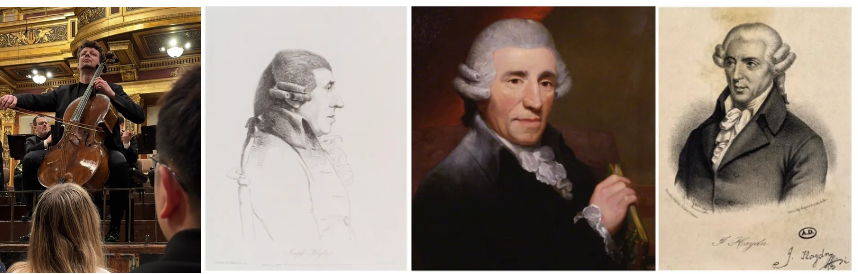
That’s why Gioia’s quip about Haydn being “ugly in every way but still attractive” made me laugh. I buy it. I don’t believe in ugly people, only ugly hearts.
Then there’s Mozart, who Gioia calls the start of “the rise of the groupie.” Affairs with servants, singers, admirers — documented in letters and gossip.
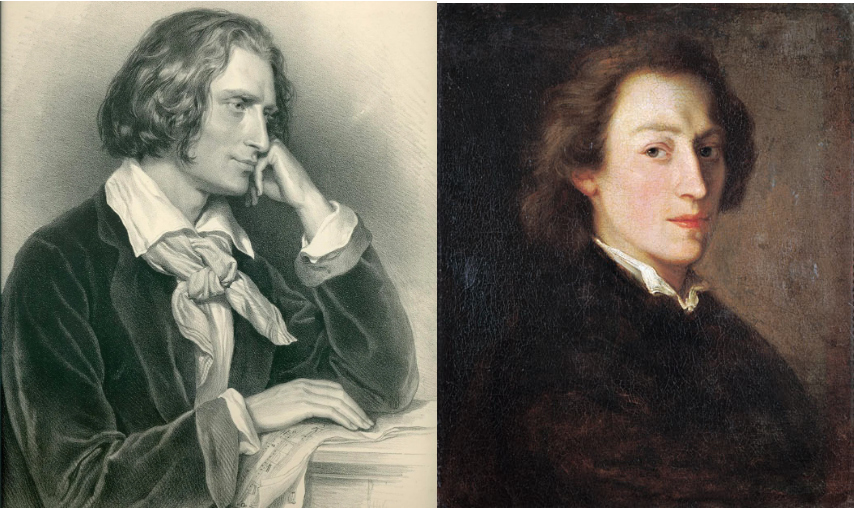
And of course: Liszt and Chopin. The famous Lisztomania! Even anonymous forum commenters insisted groupies truly began with them, citing the famous hordes of fainting women at Liszt’s concerts.
“Women would tear bits of his clothing, fight over his broken piano strings and locks of his long hair, and some fans would even throw their underwear at him.”
“Think of that killer jawline…”
Thank you, annoymous heros! You’ve basically confirmed my point: the groupie phenomenon was already alive — by Rachmaninoff’s time, it was simply waiting at the stage door.
Quora, Cows, and Rachie (or Seryozha)
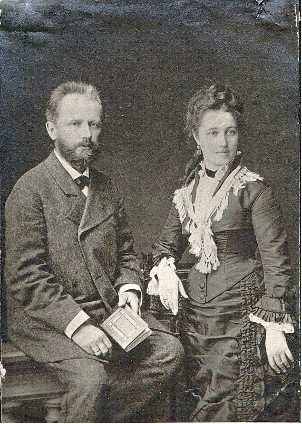
Even Quora has its gems. People argued that Tchaikovsky’s disastrous short marriage was basically a case of groupie behavior. He even claimed Liszt’s daughter — Wagner’s wife Cosima — was one of Liszt’s illegitimate children from his groupie affairs. One annoymous hero chimed in with Antonina Miliukova, who wrote Tchaikovsky endless histrionic love letters. (Is that the same girl? The internet is gloriously unreliable.) Poor Pyotr — in trying to cover his homosexuality by marrying her, he only dug himself deeper.
People often say: separate musicians from their works. Once a piece is published, recorded, released, it lives independently. I used to agree. But then I moved to the Netherlands, where Elke Melk’s milk bottles have photos of the cows who produced them, complete with names and lactose levels. Copyright and credibility! That made me realize: no, you can’t separate. Musicians matter, just as much as Dutch cows. And certainly as much as Dutch musicians.

The first time I listened to Rachmaninoff playing Rachmaninoff — only about a year ago — I was shocked there were already recordings from his era. Scratchy, scattered, not neat like Alice Sara Ott’s too-tidy Field, but delicious little crumbs.
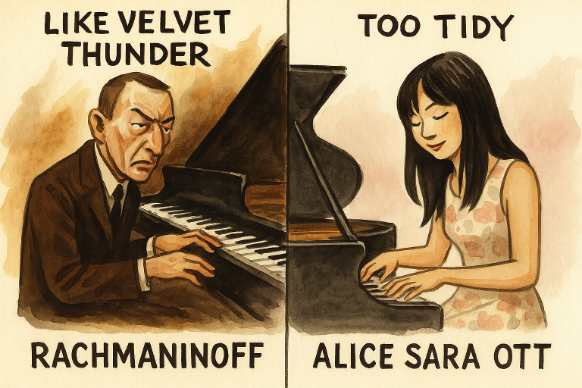
So let’s do some rebellious fangirl/groupie behavior: judging attractiveness. Between Rachie and Haydn, Rachmaninoff is more masculinely magnetic, no contest.
- Hands: beautiful, perfect for marketing.
- Playing: described as dark, brooding, hypnotic — the kind that silenced audiences or moved them to tears. In early 20th-century Europe and America, that was the equivalent of girls screaming at the Beatles. Just in corsets. (And corsets only let you faint once an evening.)
- Aura: Liszt may still look flashier today, but Rach had that tortured-soul magnetism that drew swooners, nurturers, faintissimo types who wanted to melt into his melancholy.
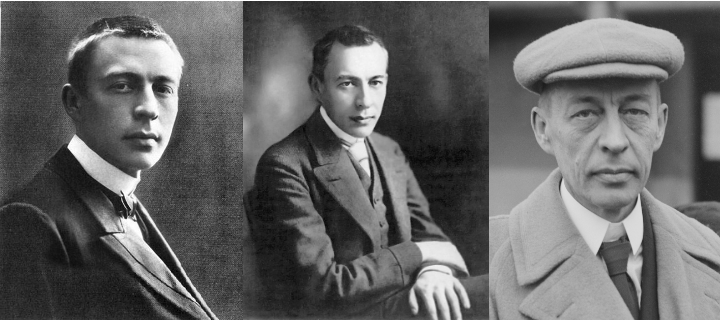
Look at his eyes in photographs: simultaneously judging your soul and composing another concerto in his head. Tell me you don’t want to whisper “daddy”. I do. As an occasional dominatrix, I am even absolutely there.
I’m certain he had groupies avant la lettre. They weren’t called that, of course — they were “society ladies,” “patrons,” “admirers.” But the phenomenon? Exactly the same.
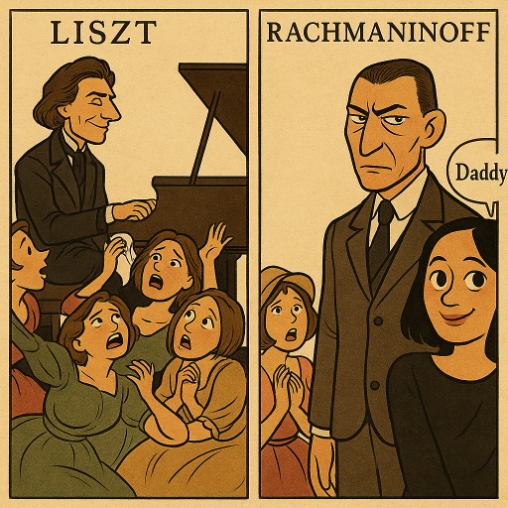
Musicality, or Why Rachie (or Seryozha) Feels Like Libido
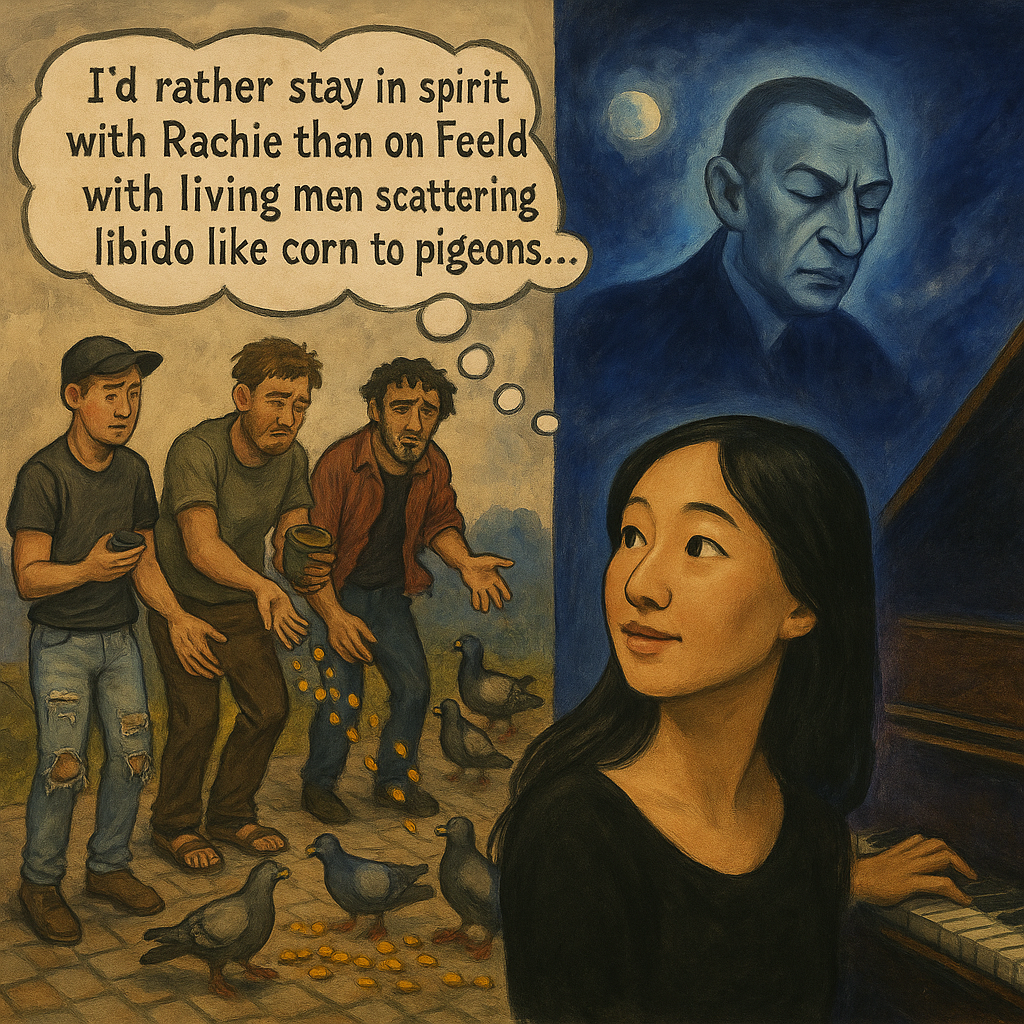
I’d rather stay in spirit with Rachie than on Feeld with living men scattering libido like corn to pigeons.
Enough fangirl gossip — let’s talk about his musicality. Even through those old crackly recordings, his playing is shockingly fluid. No heaviness, no hammering. His legato is translucent, every voice singing. Even in technical storms, it never sounds like “technique showing off” — it stretches like a human voice pulled to impossible dimensions.
When critics dismiss his big pieces as “virtuosic circus,” I think: no, you just don’t know how to play them. When Rachie himself touches them, they are intimate and cosmic at once — like whispering a prayer while building a cathedral. Unpretentious, non-performative, just flow.
That’s the paradox: many pianists today (especially competition winners, not sorry) perform phrasing. You can hear them shaping every note like: look how meaningful I am! But Rachmaninoff? Even through scratchy pre-HiFi tape, his phrasing feels inevitable, like water finding its downhill course. No showing off, no curated affect. Just one continuous line — counterpoint breathing together, harmonies unfolding as if by gravity.
And here’s the craziest part: although he wrote some of the most technically insane piano music, when he played it, it sounded effortless, transparent. Critics compared him not to an acrobat, but to a singer at the piano. One (me 😄) even called his sound “velvet thunder.”
Listening to Rachmaninoff is never passive; it is always embodied. His lines press downward into the bass, stretch impossibly high into the treble, and in between — tension, suspension, unbearable waiting. This is not music that politely resolves; it lingers, withdraws, returns. To call this phrasing is too modest. It is seduction. The score itself teaching you that sound can hover at the edge of release and still hold you trembling.
I feel it in my head, in my body, in my bones. As if he never left the world — not a body, but an energy. Libido. Every key becomes part of him, every phrase a breath. That’s why listening doesn’t feel like “a pianist performing,” but like the universe sighing straight into your chest.
Libido, or Why I’m Still Rachie’s Groupie
Scholars like to say libido is about genitals. I disagree. Libido is spark, disturbance, that ticklish current when a phrase pierces bone marrow. I don’t need to touch Rachie to feel him. My groupie-ness has become a method: trained desire that listens sharply enough to tell the genuine from the performed.
Groupie ≠ lust alone. It’s a spectrum: on one end: blind frenzy, swallowing the musician into fantasy. On the other: acute listening, where desire lives in vibration, phrasing, resonance — not in bedsheets.
- Lacan.
“Desire is structured around lack, always mediated by the Other (Lacan, 1977).”
Libido as lack, desire as the thing you can’t have, mediated by the Other. Sure, I feel the unresolved tingle. But in my case it isn’t lack — it’s fuel. I don’t feel hollow; I feel charged. The crush doesn’t drain me, it powers me.
2. Butler.
“Gender and desire emerge not from essence but from repeated acts — performance itself (Butler, 1990).”
Desire as performance, gender as repeated acts. But my crush isn’t just a repetition of roles. With some men, yes — dominant, submissive, even not as kinky, sex as play. With some others that are rare? No script. Just ambiguity. That’s not repetition; that’s counterpoint. Well, if Rachie was alive.
3. Beyond them.
Libido here is closer to Rachmaninoff’s long suspensions. Not just sex drive, not just performance, but embodied resonance. Desire as sound-wave energy: charging my body, fueling my writing, letting me suffer and enjoy without consummation. Not reducible to lack or norm — vibration that sustains.
So if groupie means desiring across power structures, then yes: I’d rather be a groupie than a muse. At least groupies choose.
Seryozha, play with my heart again — even from the grave.
I’ll never sleep with Rachmaninoff. But I’ll always be his groupie. Because groupie-ness isn’t about sharing a bed — it’s about sharing a frequency. Lust can cover the eyes, but sound uncovers bones. And sometimes your ears betray you: they know exactly when a living pianist hits that same line.
Reference:
Butler, J. (1990). Feminism and the Subversion of Identity. Gender trouble, 3(1), 3–17.
Cline, C. (1992). Essays from Bitch: The Women’s. The Adoring Audience: Fan Culture and Popular Media, 69.
Des Barres, P. (1987). I’m with the Band: Confessions of a Groupie. Beech Tree.
Gioia, T. (2021, July 28). Did groupies originate in the time of Haydn & Mozart? The Honest Broker. Retrieved [Month Day, Year], from https://www.honest-broker.com/p/did-groupies-originate-in-the-time
Hannell, B. (2020). Fan studies and/as feminist methodology. Transformative Works and Cultures, 33.
K. Rob. (2022). Did the great composers like Beethoven, Chopin and Tchaikovsky have groupies? [Answer on Quora]. Quora. https://www.quora.com/Did-the-great-composers-like-Beethoven-Chopin-and-Tchaikovsky-have-groupies
Lacan, J. (1977). Écrits: A Selection. 1966. Trans. Alan Sheridan. New York: Norton, 1955–1956.
Lange, B. P., & Euler, H. A. (2014). Writers have groupies, too: high quality literature production and mating success. Evolutionary Behavioral Sciences, 8(1), 20.
Magnusson, G. (2009). The “G” Word: Language, Power and Sexual Identity of the ‘Groupie’and Rock Culture, 1965–1975. The Mirror-Undergraduate History Journal, 29(1), 75–102.
Ortiz, S. M. (2022). sport groupies: perpetuating patriarchal power. Contexts, 21(1), 57–59.
Rhodes, L. L. (2001). Groupies, girls, and chicks: Articles on women musicians and fans in “Rolling Stone” and selected other mainstream magazines, 1967–1972. The University of Texas at Austin.
u/waitingforthesun92. (2022, July 5). In the 19th century, Hungarian composer Franz Liszt was the subject of intense fan frenzy… [Reddit post]. r/Damnthatsinteresting. Retrieved September 2, 2025, from https://www.reddit.com/r/Damnthatsinteresting/comments/10jxddl/in_the_19th_century_hungarian_composer_franz/
 Serongtonin
Leave a comment